
Ports and marinas
Berthing and waterfront systems: salt is not a risk here, it is the design environment.
Applications
- Single-beam pontoons and floating platforms
- Access gangways and fingers
- Berthing fenders
- Waterfront walkways
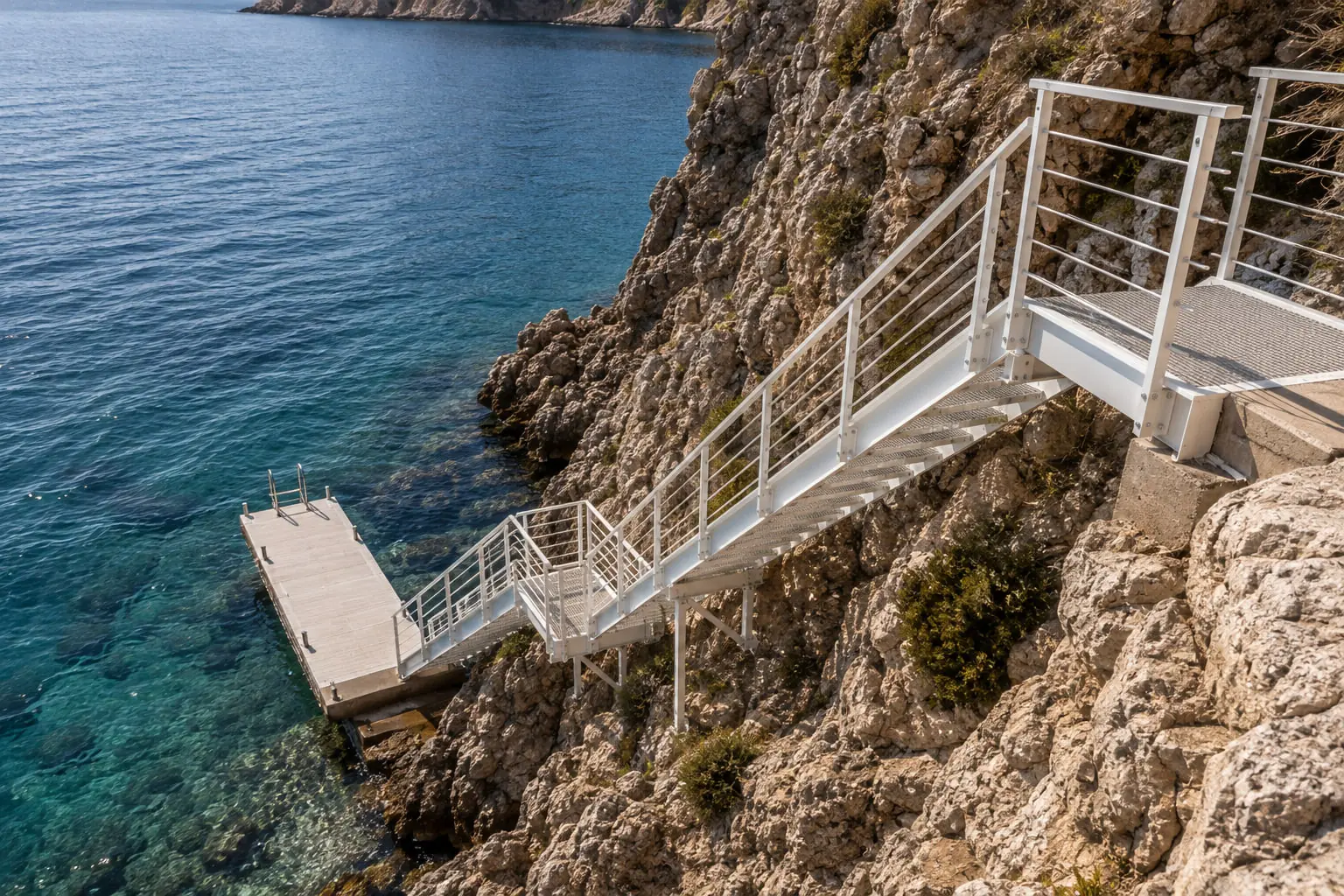
- Coastal and cliffside stairs
- Service and boatyard quays
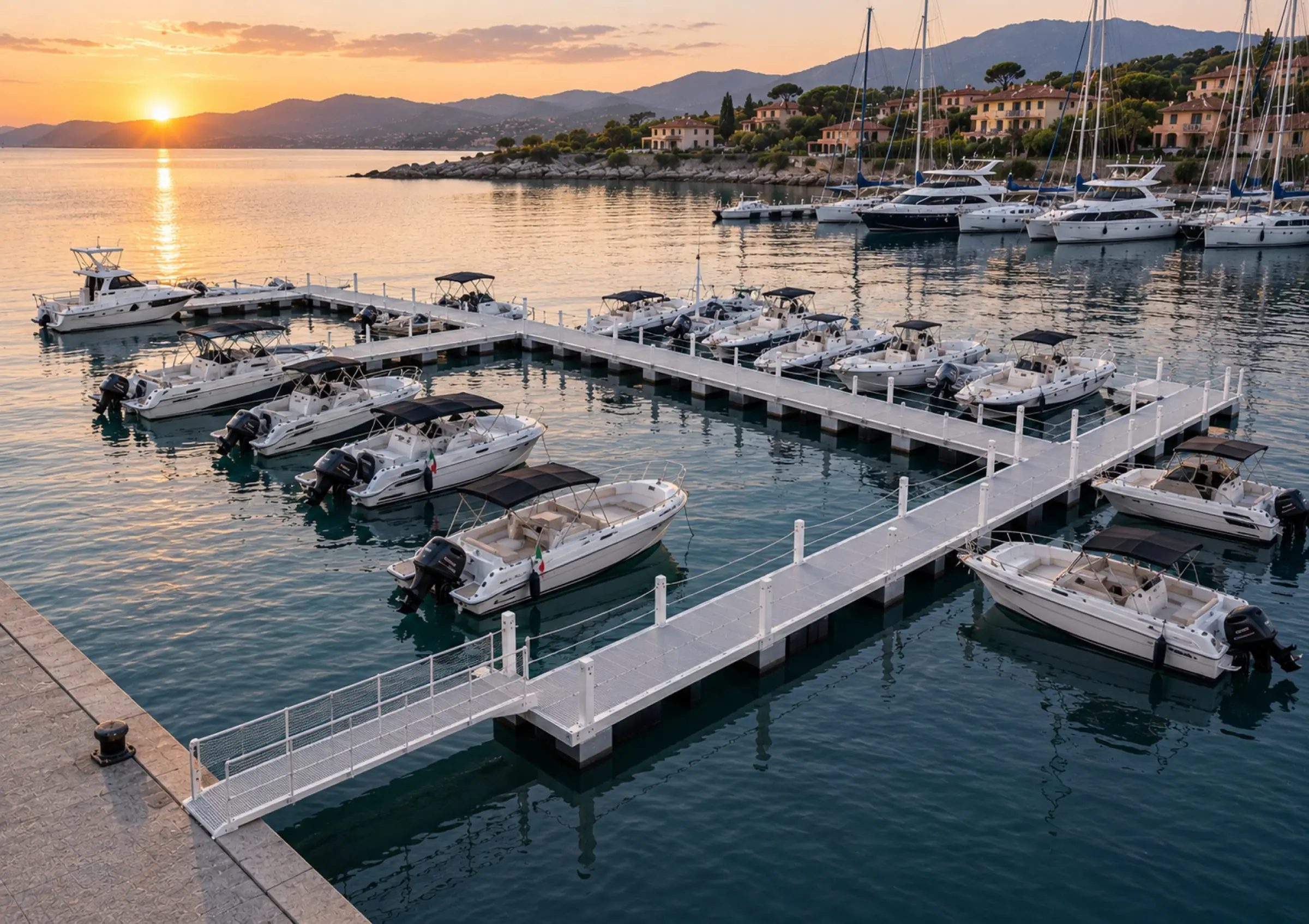
The berthing range
GRP for ports and marinas.Resistant to salt. Light to install.
We build GRP structures, gangways and walkways for marine environments, made to measure for each project.
GRP does not rust, withstands damp and salt, and its low weight makes transport and installation easier. Practical advantages, with less maintenance over time.
Where technically possible, components can be recovered and reconfigured for new uses before disposal.
Gratings certified to last: tested to UNI EN ISO 9142 with heat, cold and humidity cycles, with no loss of mechanical performance.
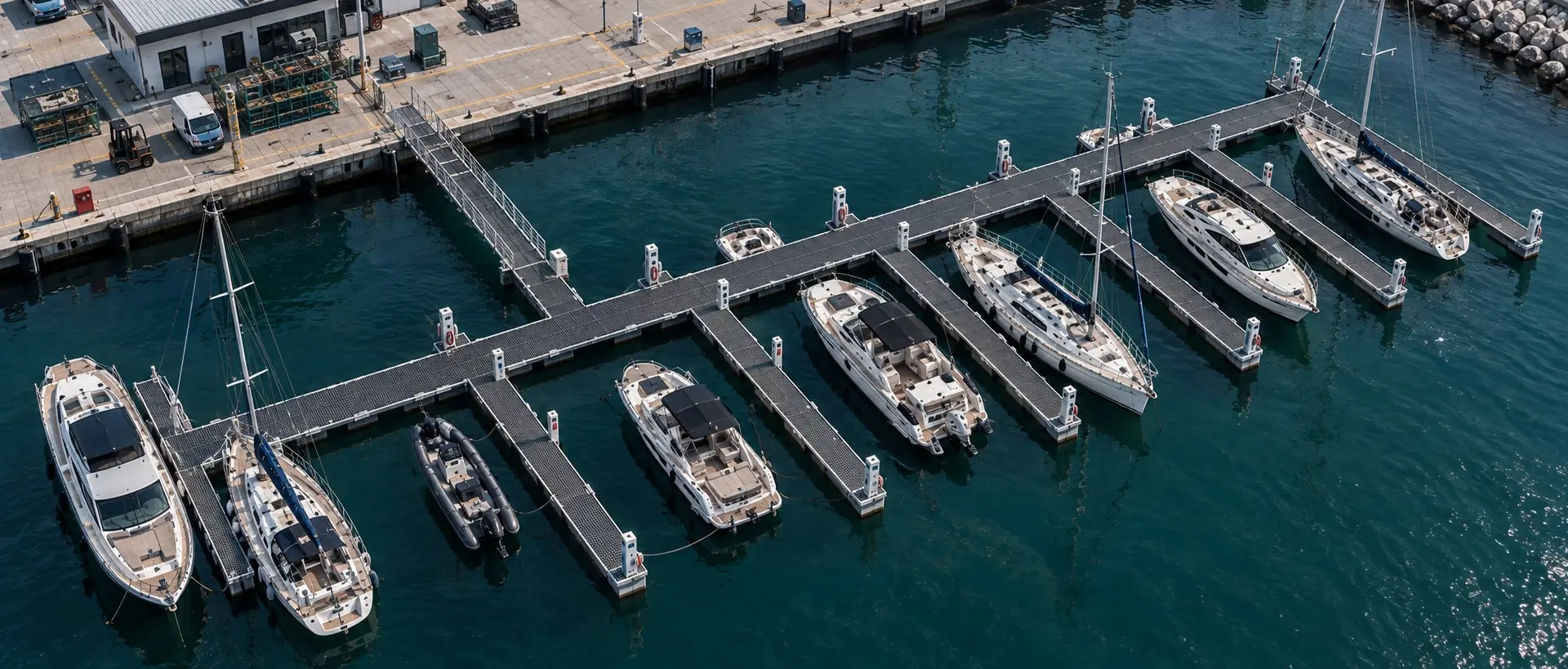
The whole comb, from the quay
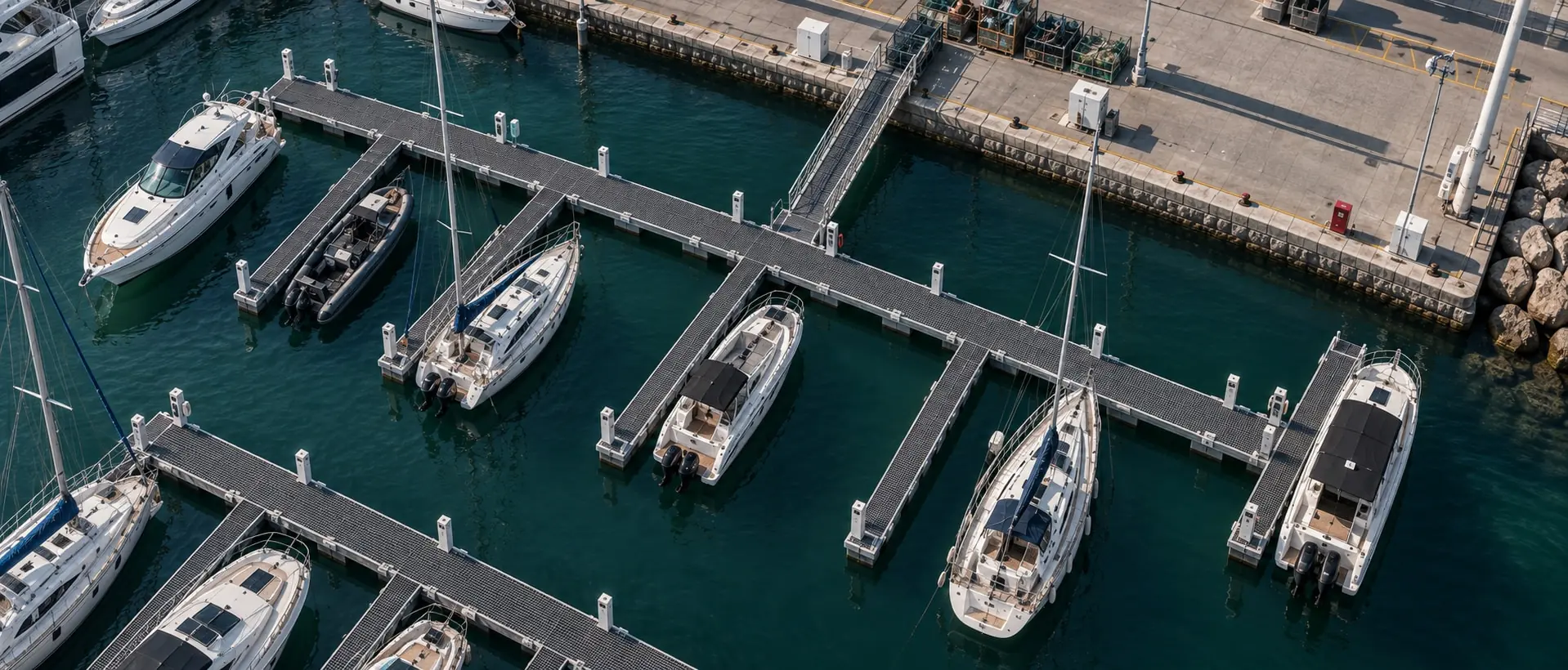
Main pontoon and fingers
Design images.
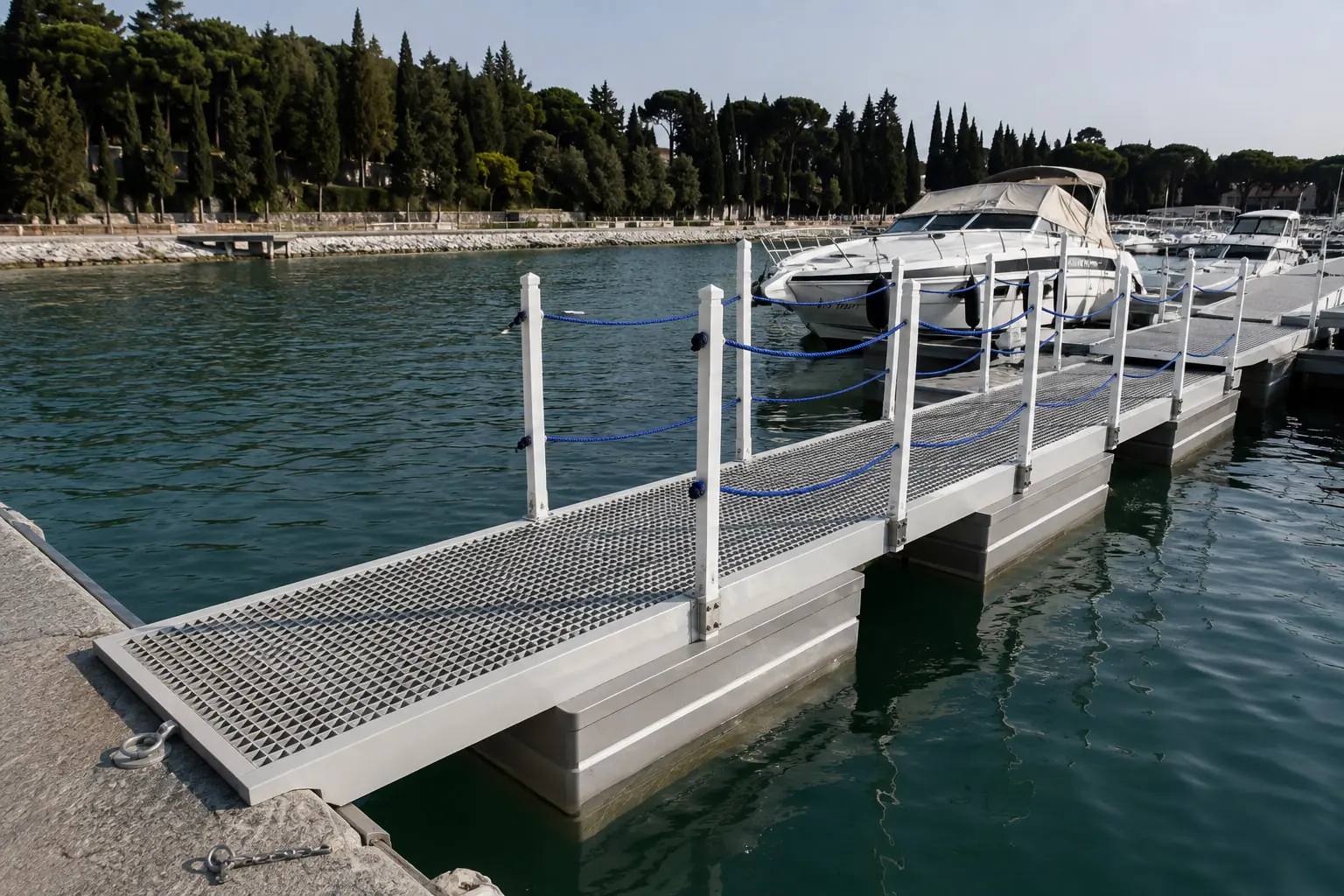
Design image.
The range, up close
Access gangway
- Pontoon modules
- 3.6 · 4.9 · 6 × 2.5 m
- Access gangways
- 2.5 to 6.25 m
- Fingers
- to the berth layout
Flagship application
Berthing fenders
Berth protection in a salt environment: impact absorption with no coating to renew and no reinforcement to corrode. RS fenders are part of the berthing system — sized together with the pontoon, the fingers and the walkways they protect — and are also available as a standalone supply for existing structures.
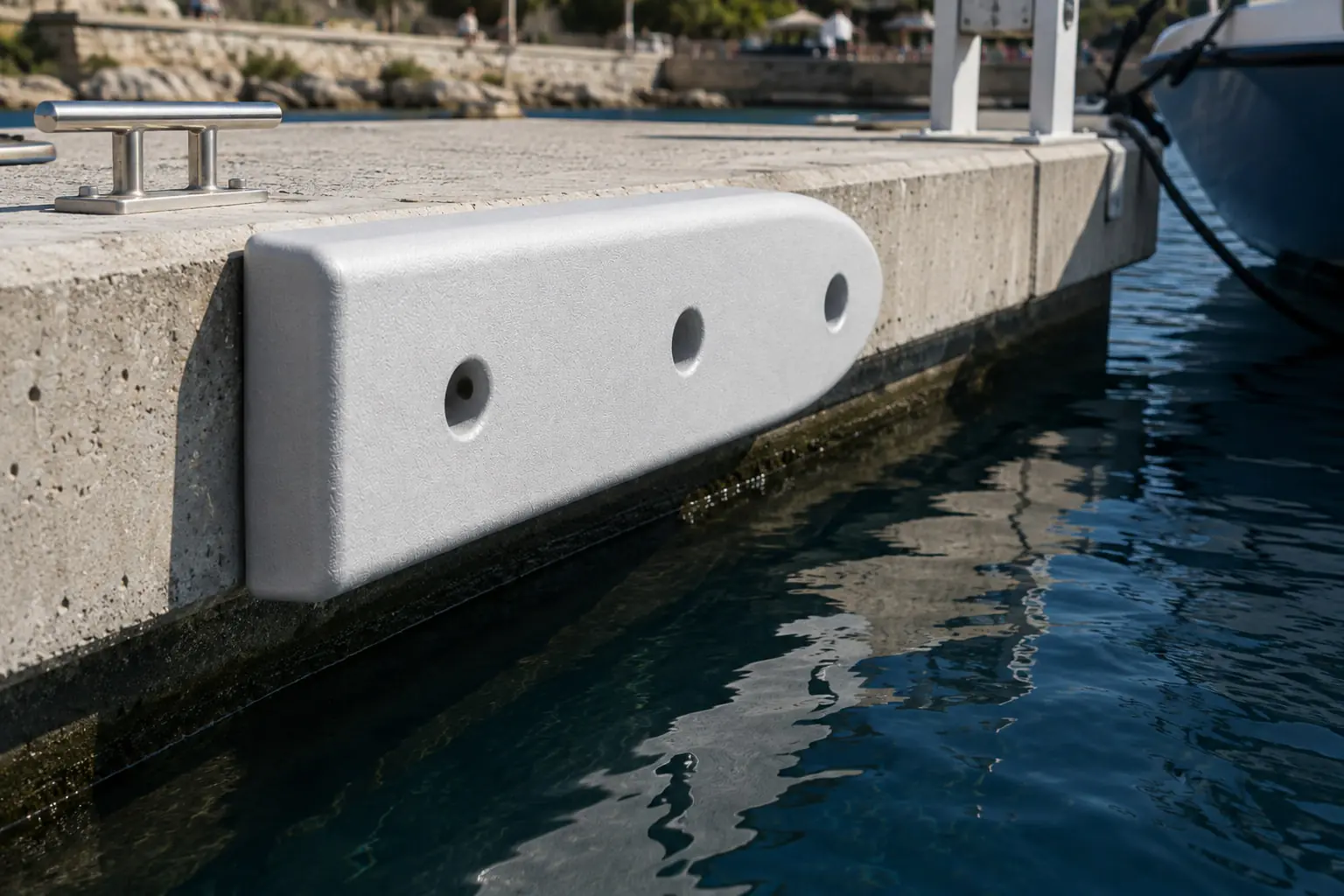
Design image.
Routes over water
The pontoon becomes a route.For cyclists too.
The same modules that make a berth make a floating cycle route: pultruded structure, draining grating deck, floats underneath. The geometry changes — a ribbon instead of a comb — the system does not.
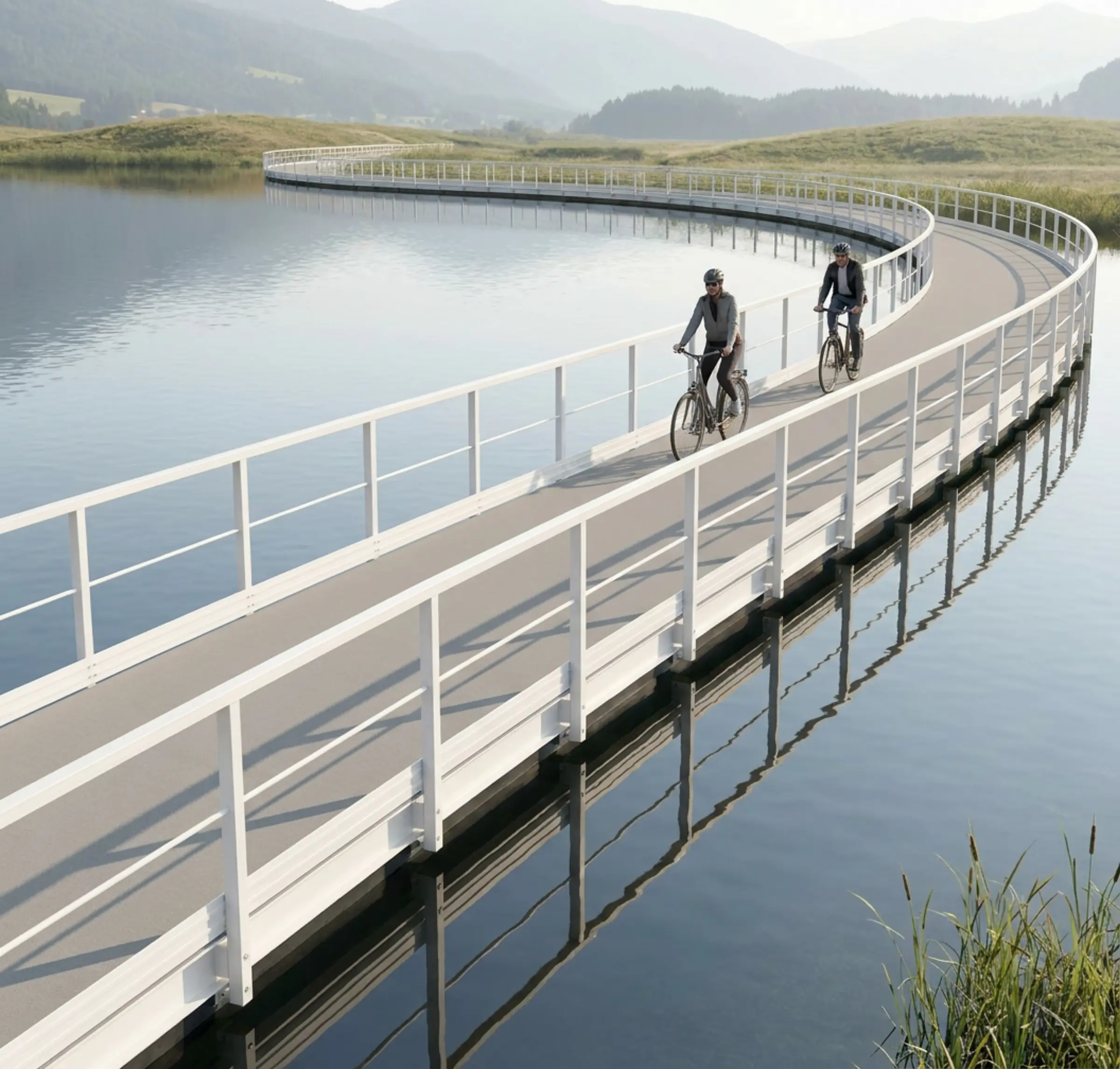
Design image.
Design image.
Access to the sea
Where the rocks leaveno room for a building site
Coastal stairs, walkways and landing decks follow the shape of the rock: light modules that can be moved without heavy lifting plant, on point supports rather than concrete works. Structure, railing and grating are the same elements of the system — what changes is the geometry, and that belongs to the site.